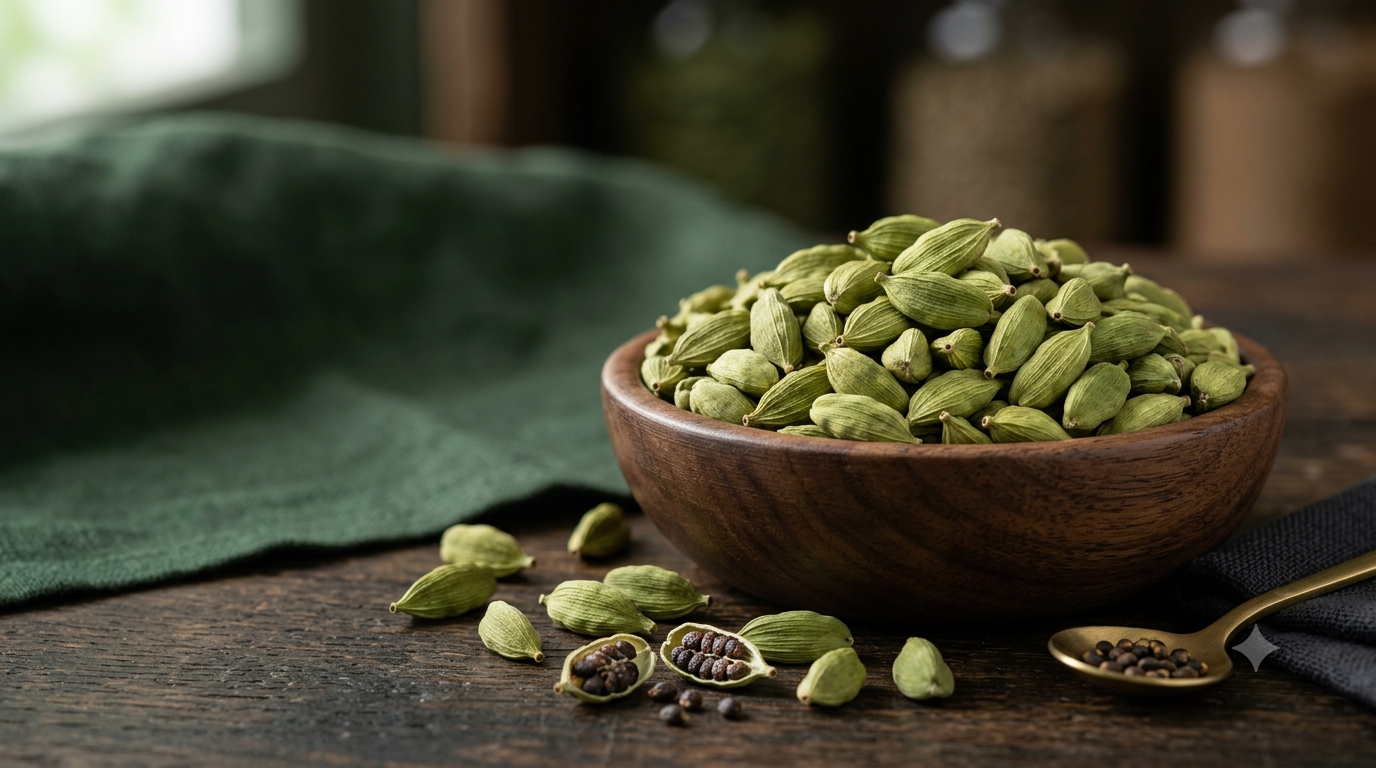
Cardamom is a highly valued spice in international food markets because of its distinctive fragrance, rich flavour and versatility. It is used in traditional cooking, coffee, tea, confectionery, bakery products and commercial spice blends. For businesses purchasing spices internationally, choosing the right supplier is essential for maintaining product quality and building a dependable supply chain.
Cardamom exporters in India serve a wide range of potential buyers, including spice importers, wholesalers, food manufacturers, distributors and private-label businesses. However, choosing an export partner involves more than comparing prices. Buyers must also consider product grades, quality specifications, packaging, documentation and delivery requirements.
India has an established spice industry and a long history of cardamom cultivation and trade. This makes it an important sourcing destination for businesses looking to explore Indian-origin cardamom.
This guide explains how international buyers can evaluate suppliers, understand cardamom pricing, compare global origins and prepare for a successful sourcing process.
Why Choose Cardamom Exporters in India?
India offers an established agricultural and trading ecosystem for spice sourcing. Cardamom is cultivated in parts of southern India, particularly Kerala, Karnataka and Tamil Nadu. These regions contribute to the country’s small green cardamom industry.
Working with an Indian supplier can give buyers access to different commercial grades and product specifications, depending on availability.
There are several factors worth considering when sourcing cardamom from India.
Product variety: Buyers can explore small green cardamom, large cardamom and other product forms, subject to supplier availability.
Commercial flexibility: Suppliers may offer different grades, quantities and packaging configurations.
Established spice expertise: India’s spice trade supports sourcing, processing, quality assessment and export operations.
Multiple applications: Cardamom is suitable for beverage production, food manufacturing, retail spice packs and wholesale distribution.
International sourcing opportunities: Buyers can compare Indian suppliers with other origins to identify products that meet their requirements.
The right supplier depends on the buyer’s intended application, quality expectations, order size and destination market.
Types of Cardamom Available for Export
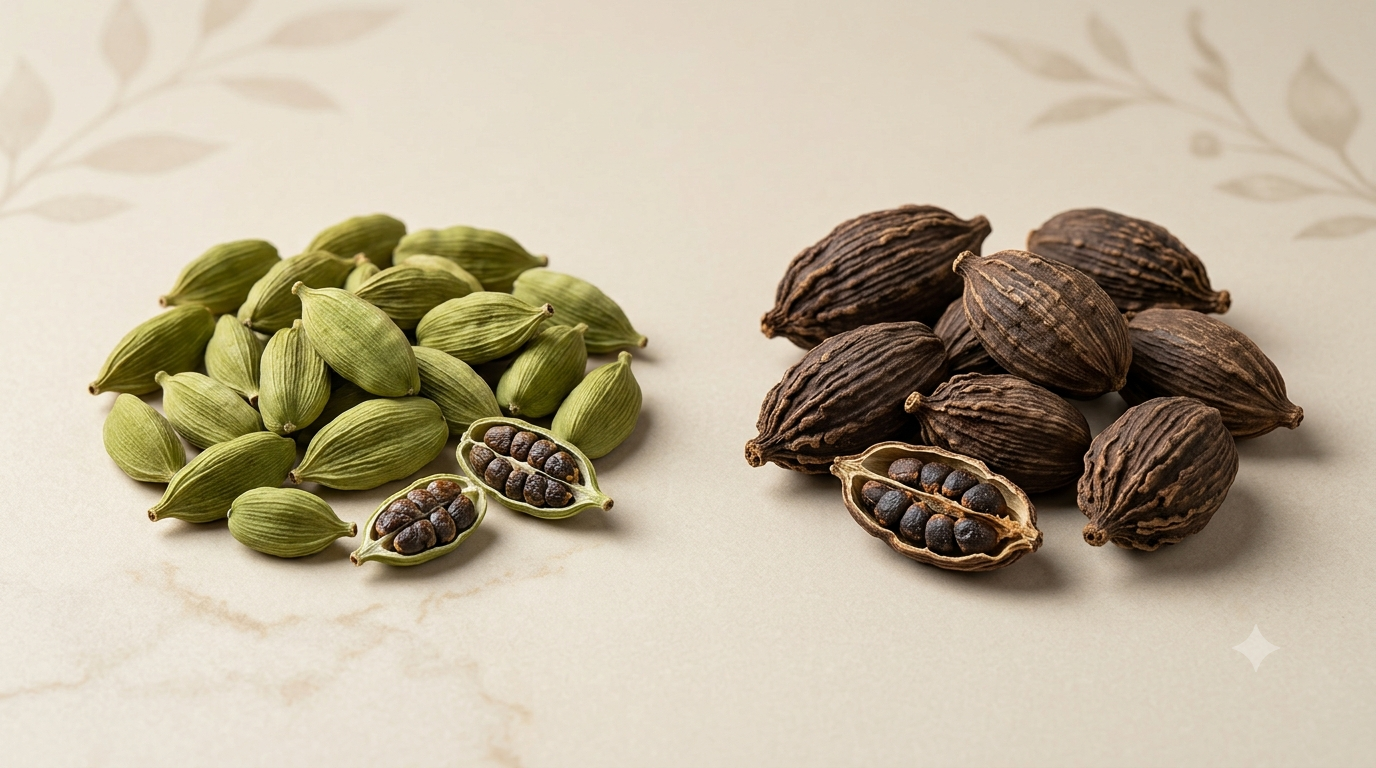
Before contacting cardamom exporters in India, buyers should understand the differences between the main commercial types. This helps avoid confusion when requesting samples and quotations.
Small Green Cardamom
Small green cardamom, commonly known as green elaichi, is widely used in Indian cuisine, tea, coffee, desserts and premium spice blends. Its sweet, aromatic profile makes it popular across several international food markets.
Buyers often assess green cardamom according to capsule size, colour, aroma, moisture, cleanliness and the percentage of defective pods.
Different grades may be available depending on the supplier and the current crop. Therefore, importers should request a clear specification rather than relying on a general description such as premium quality.
Large or Black Cardamom
Large cardamom is a different variety with a stronger, more earthy and smoky flavour profile. It is commonly used in savoury dishes, sauces and spice mixtures.
Its appearance, flavour and culinary applications differ from those of small green cardamom. Buyers should specify the variety explicitly when requesting an export quotation.
Cardamom Seeds and Powder
Some businesses require processed cardamom rather than whole pods.
Cardamom seeds may suit applications where the outer capsule is not required. Cardamom powder can be used in spice blends, bakery ingredients and food manufacturing.
Availability depends on the supplier’s processing capabilities. Buyers should also establish the required particle size, packaging, shelf-life expectations and quality specifications before placing an order.
How to Select Reliable Cardamom Exporters in India
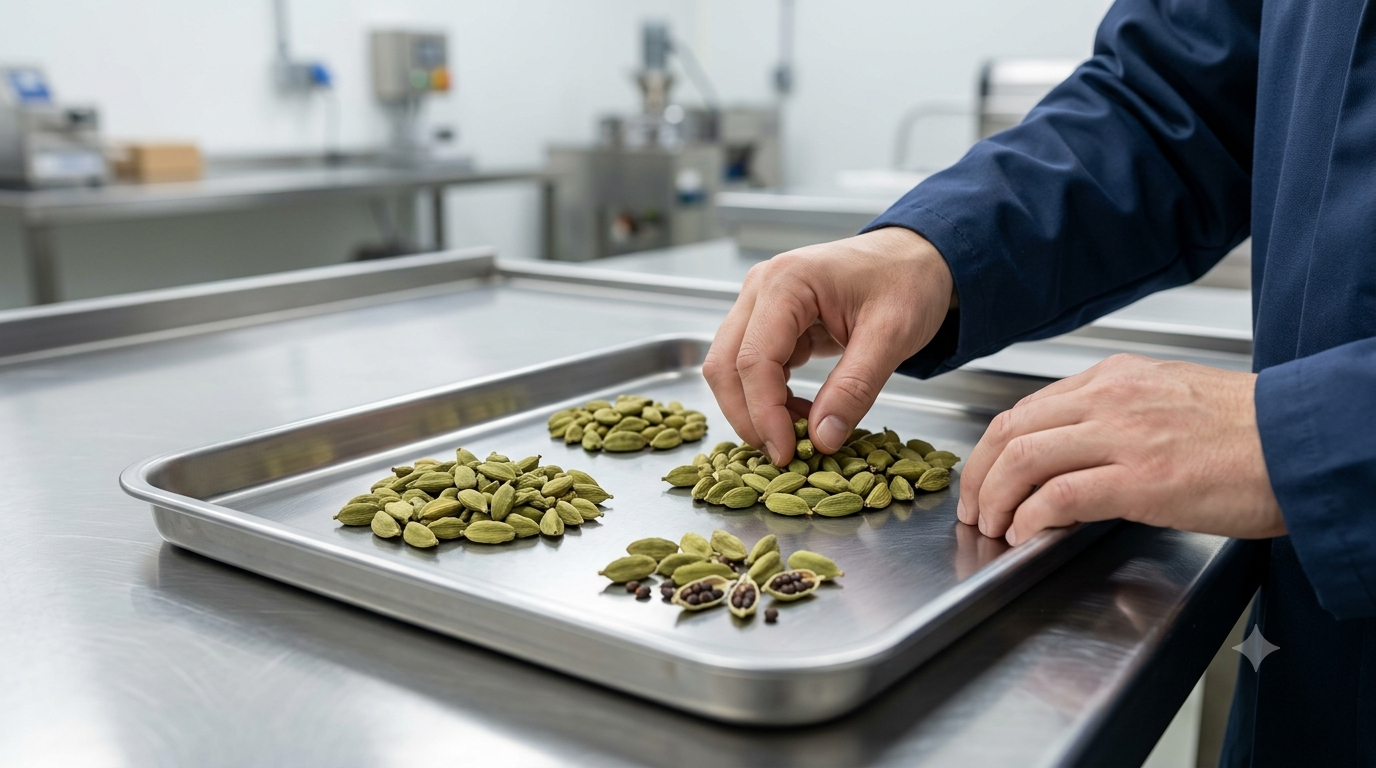
Businesses searching for the top 10 cardamom exporters in India or the largest exporter of cardamom in India should evaluate suppliers using verifiable business information.
Online rankings do not necessarily establish export volume, product quality or reliability. A more practical approach is to compare suppliers against consistent selection criteria.
1. Check Product Specifications
Ask whether the supplier handles the exact cardamom variety and grade you require. Request details about capsule size, appearance, moisture, cleanliness and acceptable defect levels.
A written specification helps both parties understand the expected product quality.
2. Evaluate Export Capabilities
Discuss the supplier’s experience with international shipments, applicable registrations and export documentation. Ask which destination markets the supplier can serve and whether the required documents can be provided.
Verify the relevant business credentials before entering into a commercial agreement.
3. Request Product Samples
Samples allow buyers to assess aroma, appearance and suitability for their intended application. Compare samples from different suppliers using the same evaluation criteria.
For larger orders, agree on how the final shipment will be assessed against the approved sample and written specifications.
4. Compare Packaging Options
Packaging should protect the spice during handling, transportation and storage. Ask about available bulk packaging, protective liners and customised packaging options.
The final choice should reflect the order quantity, shipping conditions and destination-market requirements.
5. Review Quotations Carefully
A reliable quotation should clearly identify the product, grade, quantity, packaging, delivery terms, payment conditions and quotation validity.
Compare quotations on an equivalent basis rather than selecting the lowest headline price.
6. Assess Communication and Traceability
Clear communication helps resolve questions about quality, shipment preparation and documentation. Buyers should also ask how the supplier identifies product lots and handles quality-related concerns.
These checks help importers make informed decisions when comparing Indian cardamom suppliers.
What Determines Cardamom Export Price in India?
The cardamom export price in India can change with crop availability, product grade, market demand and shipping conditions. There is no single price that applies to every variety or export order.
International buyers should consider the following factors when requesting a quotation.
Grade and capsule size: Larger and more uniform capsules may command different prices from other commercial grades.
Product quality: Aroma, colour, moisture, cleanliness and the proportion of defective pods can affect commercial value.
Market availability: Harvest conditions, supply levels and demand can influence the price offered by suppliers.
Order quantity: Bulk procurement may have different pricing arrangements from smaller orders. Actual terms depend on the supplier and transaction.
Packaging requirements: Standard bulk packaging and customised retail packaging can involve different material and preparation costs.
Shipping terms: Freight, insurance, handling and the agreed delivery arrangement can affect the total landed cost.
Currency and payment conditions: Exchange rates and agreed payment terms may also influence the final purchasing decision.
To obtain a useful quotation, share the required variety, grade, quantity, packaging, destination country and preferred Incoterm with the supplier.
For a fair comparison, ensure that each quotation covers the same product specifications and delivery conditions.
Top Cardamom Exporting Countries: India vs Other Origins
International buyers may compare several origins when sourcing cardamom. However, the countries involved in production, export and re-export do not always play the same role.
India
India is an established cardamom-producing country with a developed spice-trading industry. Buyers sourcing Indian cardamom should evaluate the product’s origin, grade, quality specifications and supplier capabilities.
Guatemala
Guatemala is a major producer and exporter of small green cardamom. It is an important origin for international buyers comparing supply options.
Nepal
Nepal is associated with the production and trade of large cardamom. Buyers interested in this variety should compare its specifications and suitability with their intended culinary or industrial application.
Other countries may also participate in cardamom trading, distribution and re-export activities.
It is important to distinguish between the country where cardamom is grown and the country from which it is shipped. This distinction helps buyers assess origin information and maintain accurate import records.
The most suitable sourcing country depends on product requirements, availability, pricing and destination-market expectations.
Which Is the Best Cardamom in the World?
There is no single cardamom variety that is best for every buyer. The right choice depends on flavour preferences, intended use, product quality and budget.
For businesses purchasing green cardamom, the following characteristics are worth evaluating:
A fresh and characteristic aroma.
Consistent capsule size within the agreed grade.
Natural colour and acceptable appearance.
Appropriate moisture levels for the product specification.
Low levels of foreign matter and defective pods.
Compliance with relevant food-safety requirements.
Consistency between approved samples and delivered consignments.
Indian and Guatemalan green cardamom are both relevant options for international procurement. Buyers should compare actual samples and specifications instead of assuming that one origin always offers superior quality.
For food manufacturers, consistency and suitability for the intended recipe may be more important than appearance alone. For retail brands, capsule size, visual uniformity and presentation may carry greater importance.
The best purchasing decision comes from matching product characteristics to the needs of the final customer.
Cardamom Quality Checks Before Importing
Quality assessment is an important part of international spice procurement. A clear inspection process helps buyers establish expectations before a shipment is dispatched.
Examine Appearance and Cleanliness
Check the sample for colour consistency, damaged capsules, excessive broken pods and visible foreign matter. Confirm whether the product meets the agreed commercial grade.
Assess Aroma
Cardamom should have an aroma characteristic of its variety. Unusual, stale or musty odours may indicate a quality concern and should be investigated before approval.
Confirm Moisture Specifications
Buyers should agree on a suitable moisture specification and request testing when necessary. Proper moisture control and storage practices help protect product quality.
Request Relevant Test Reports
Depending on the destination country and intended use, buyers may need evidence relating to pesticide residues, microbiological parameters, contaminants or other food-safety requirements.
Confirm the applicable limits and testing requirements before finalising the order.
Review Storage and Packaging
Cardamom should be protected from excessive moisture, heat and unsuitable storage conditions. Ask the supplier how the product will be packed and prepared for transit.
Document Sample Approval
Record the approved specifications and establish the inspection process for the commercial shipment. This provides a clear reference if a quality-related issue arises.
Cardamom Export Packaging and Documentation
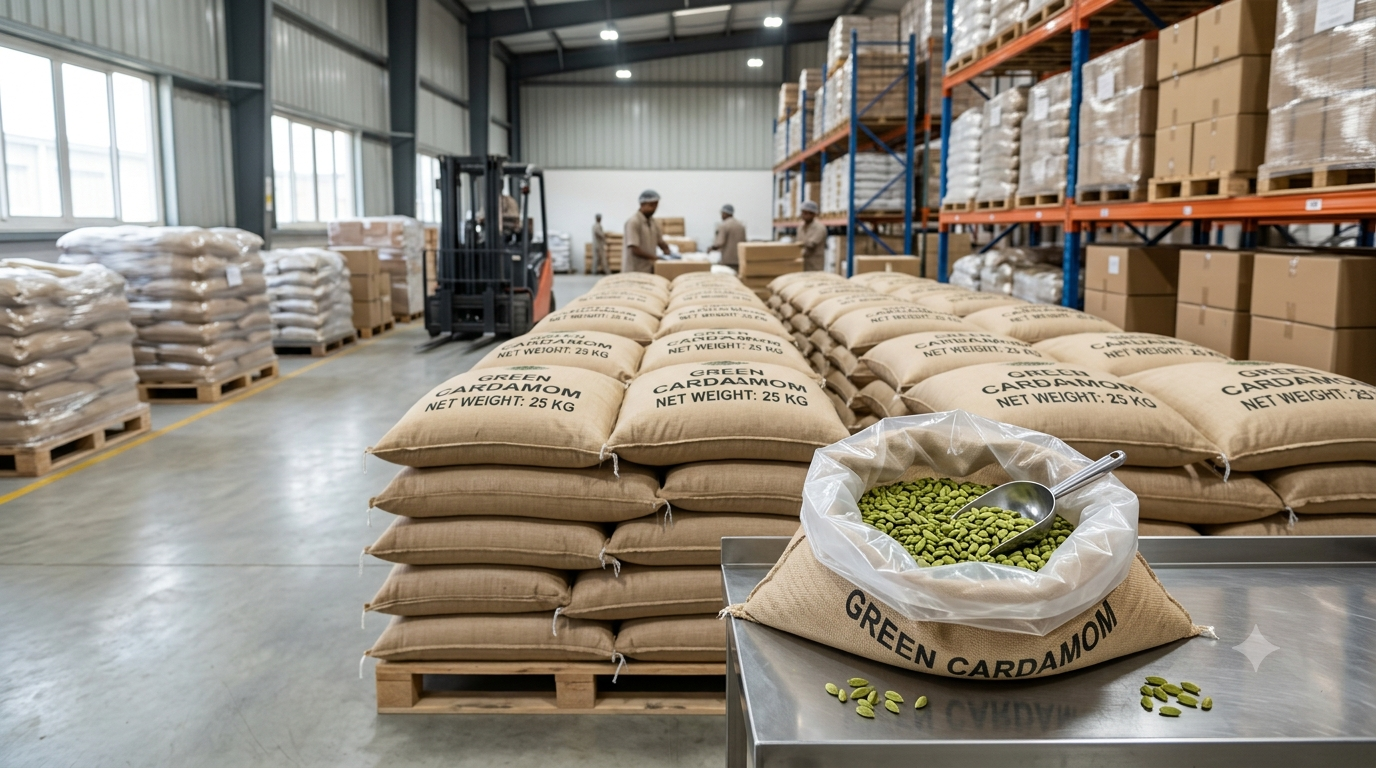
Suitable packaging helps protect cardamom during transportation, handling and storage. The packaging format should reflect the product, order size and destination market.
Depending on the supplier’s capabilities, buyers may request bulk bags, protective liners, cartons or customised retail packs. Confirm the packaging material, net weight, labelling and packing configuration before production or shipment.
Export documentation varies according to the product, destination and applicable regulations. Documents that may be relevant include:
Commercial invoice.
Packing list.
Shipping bill and transport documents.
Certificate of origin, where applicable.
Phytosanitary certificate, where required.
Relevant laboratory reports or inspection certificates, where required.
Importers should confirm current requirements with their customs broker and the competent authorities in the destination country. Requirements should never be assumed to be identical across markets.
For official information about India’s spice-export sector, visit the Spices Board of India.
How to Buy Cardamom from India

A structured procurement process can help importers compare suppliers and reduce avoidable misunderstandings.
Step 1: Define your requirements. Specify the variety, grade, quantity, intended application and destination country.
Step 2: Shortlist potential suppliers. Research cardamom exporters in India that can discuss your required product and commercial specifications.
Step 3: Request comparable quotations. Provide the same requirements to each shortlisted supplier so that pricing and terms can be evaluated fairly.
Step 4: Evaluate samples and documents. Assess product quality and review applicable registrations, test reports and export documentation.
Step 5: Agree on commercial terms. Confirm the price, quantity, packaging, payment terms, delivery arrangement and quality specifications in writing.
Step 6: Verify import requirements. Check destination-market rules, labelling obligations and required certificates before shipment.
Step 7: Establish repeat-order specifications. Document the approved product grade and quality expectations to support consistency across future purchases.
This process can help businesses build a more informed approach to sourcing cardamom internationally.
Explore Spice Sourcing with Kuber Export House
Kuber Export House is an Indian B2B spice-export business focused on connecting international buyers with Indian spice products.
Importers, wholesalers, distributors and food manufacturers exploring Indian spice sourcing can contact Kuber Export House to discuss their requirements and potential supply opportunities.
When making an enquiry, share the preferred product, variety, grade, quantity, packaging requirements and destination country. This information helps establish whether the requested specifications can be accommodated.
Before confirming an order, buyers should request the relevant product specifications, a current quotation and the applicable export documentation.
To explore the business and discuss your sourcing requirements, visit Kuber Export House.
Conclusion
Selecting suitable cardamom exporters in India requires careful consideration of product quality, grade, pricing, packaging and export capabilities. A supplier’s online visibility alone cannot establish whether its products meet your requirements.
By requesting comparable quotations, evaluating samples and verifying the relevant documentation, international buyers can make more informed sourcing decisions.
Whether you need green cardamom for wholesale distribution, retail packaging or food manufacturing, clearly documented specifications can help establish expectations and support a consistent purchasing process.
For businesses exploring Indian spice sourcing, Kuber Export House provides a starting point for discussing export requirements and potential supply opportunities.