
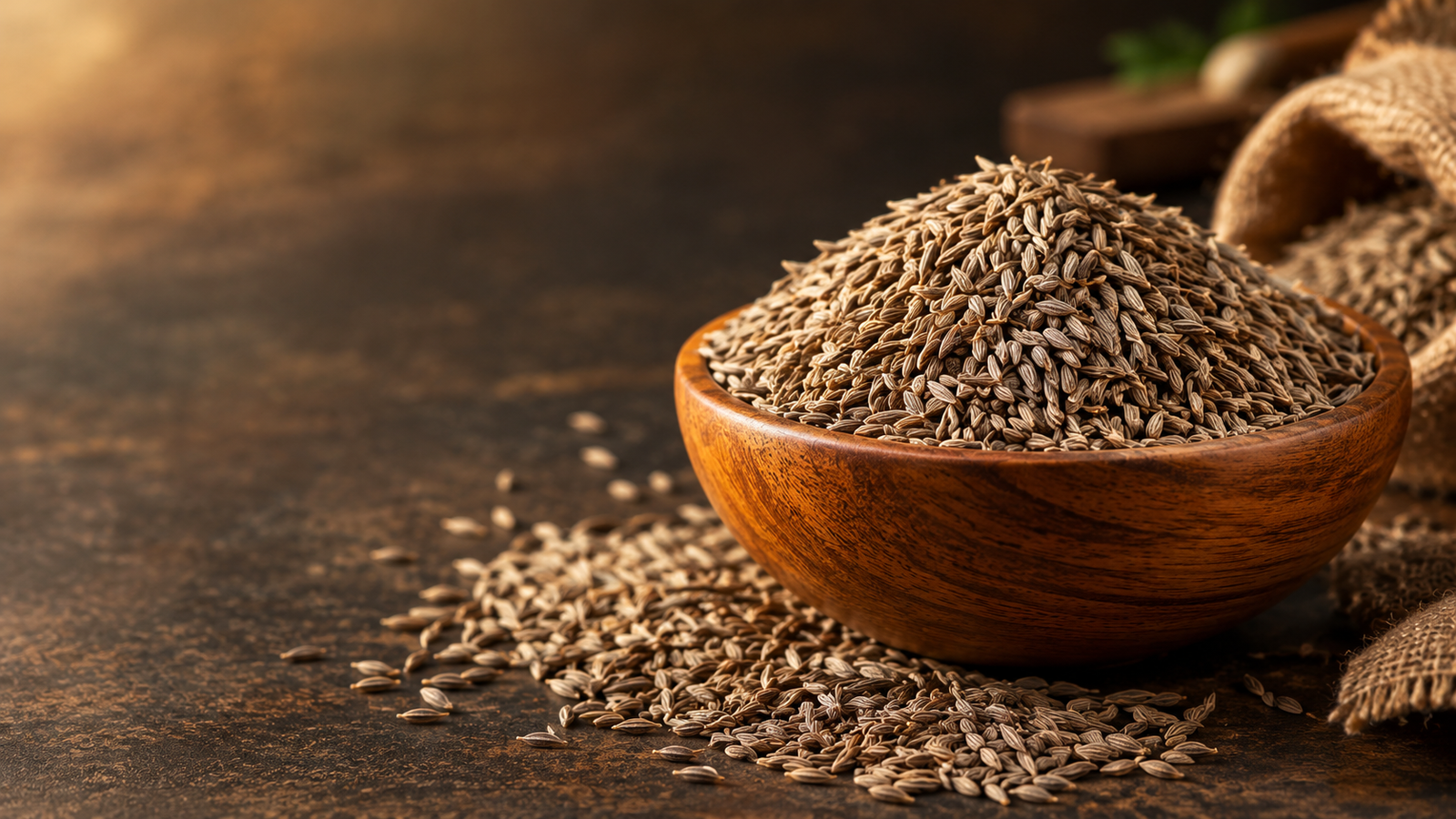
India holds an important position in the international cumin trade, supplying this aromatic spice to food manufacturers, wholesalers, spice distributors, importers and retail packaging businesses worldwide. For international buyers searching for a cumin seeds exporter from India, understanding the product, its agricultural origins, quality parameters and major export destinations can make sourcing decisions more informed.
Known as jeera in India, cumin is widely used in seasoning blends, curry powders, pickles, packaged foods and commercial food preparation. Its distinctive aroma and earthy flavour make it a valuable ingredient across different cuisines and food industries.
Kuber Export House is an India-based spice export business serving B2B sourcing requirements for international markets. This guide explores Indian cumin seeds, commonly grown varieties, export quality considerations and the global markets that import cumin from India.
What Are Cumin Seeds? Botanical and Product Overview
Cumin is an aromatic spice obtained from the dried fruits of the plant Cuminum cyminum, which belongs to the Apiaceae family. Although commonly called seeds in commercial trade, the product is botanically classified as dried fruits.
The plant is cultivated for its characteristic elongated fruits, which have a warm aroma, earthy flavour and slightly bitter notes. Whole cumin is traded internationally for direct culinary use, grinding, seasoning production and food manufacturing.
Key Facts About Indian Cumin Seeds
Property | Details |
Common Indian name | Jeera |
English name | Cumin |
Scientific name | Cuminum cyminum |
Plant family | Apiaceae |
Commercial product | Dried aromatic fruits commonly called cumin seeds |
Flavour profile | Warm, earthy and slightly bitter |
Major Indian producing states | Gujarat and Rajasthan |
Common applications | Cooking, curry powders, spice blends, pickles, seasonings and food manufacturing |
These characteristics make cumin an important commodity for the international spice supply chain. However, commercial buyers should distinguish between the botanical identity of cumin and the actual specifications required for a particular purchase.
Why Is India an Important Cumin Seeds Exporter?
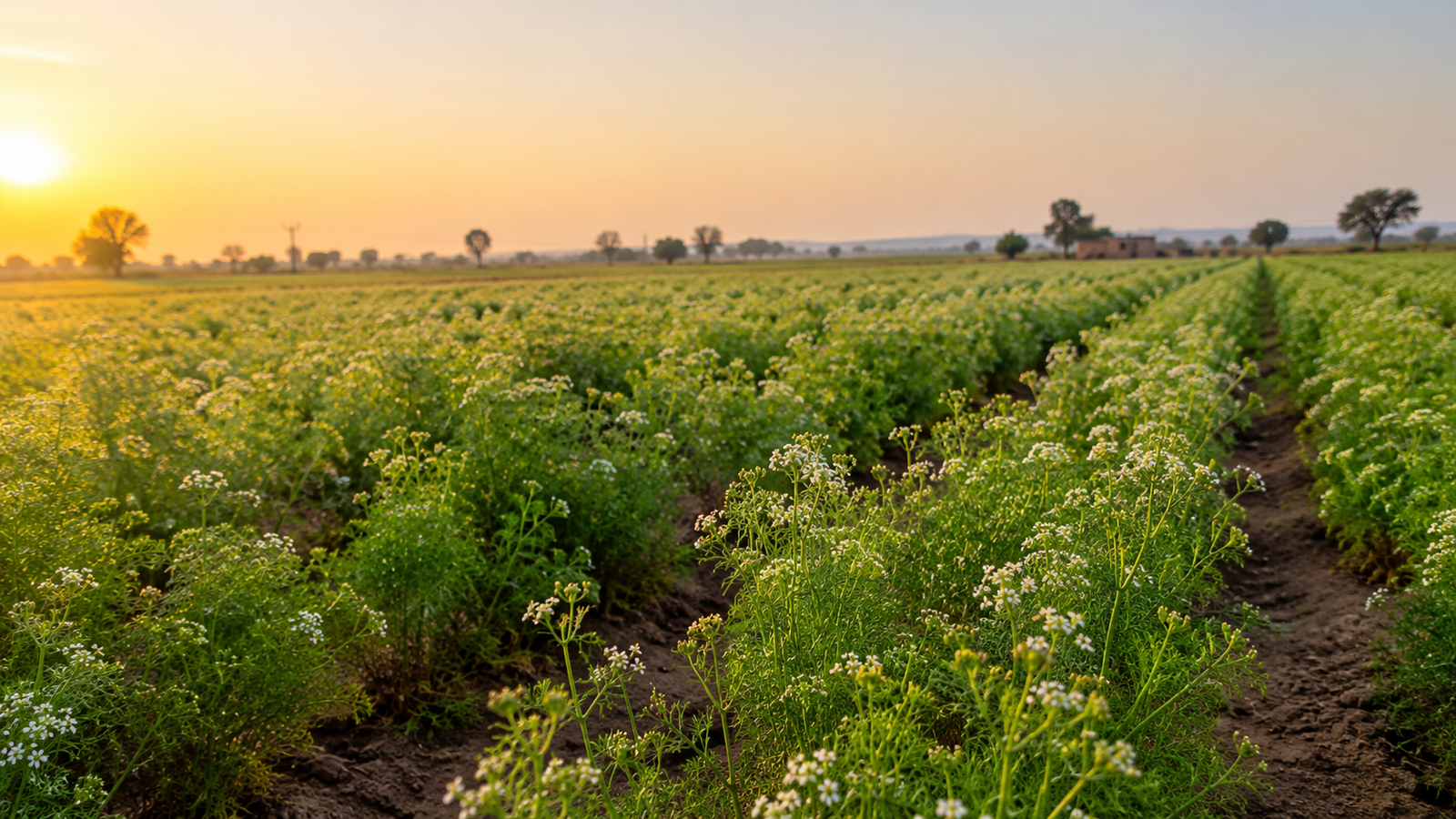
India has an established cumin cultivation and trading ecosystem, supported by agricultural research, processing facilities and domestic as well as international spice markets.
Gujarat and Rajasthan are the principal states associated with Indian cumin production. Their agricultural conditions and established cultivation practices contribute to India’s role in the global cumin trade.
For international buyers, sourcing from India can provide access to suppliers offering different product specifications and commercial arrangements.
Cumin from India is used by several categories of businesses, including:
- International spice importers and commodity traders
- Wholesale spice distributors
- Food processing companies
- Seasoning and curry powder manufacturers
- Private-label spice businesses
- Food-service and commercial kitchen suppliers
- Retail spice packaging companies
The right supplier depends on the buyer’s target specifications, required quantity, intended application, destination-market regulations and commercial terms.
A professional Indian cumin seeds exporter should be able to discuss these requirements clearly before confirming a transaction.
Major Indian Cumin Varieties: GC-4, GC-1, GC-2, GC-3, RZ-19 and Others
Indian cumin cultivation includes several varieties and research-developed genotypes associated with different agricultural environments. These varieties have been studied for characteristics such as maturity period, seed traits, yield performance and tolerance or resistance to certain crop diseases.
Some of the commonly referenced Indian cumin varieties are listed below.
Variety | Agricultural overview |
GC-1 | Gujarat Cumin-1, an established Indian cumin cultivar |
GC-2 | Gujarat Cumin-2, developed for Indian cumin-growing regions |
GC-3 | Gujarat Cumin-3, an established cultivar with documented agronomic characteristics |
GC-4 | Gujarat Cumin-4, a widely grown cultivar associated with Gujarat and known for resistance to Fusarium wilt |
RZ-19 | A cumin variety associated with Rajasthan’s agricultural research and cultivation |
RZ-209 | Reported to have tolerance to cumin wilt |
RZ-223 | A variety documented for wilt resistance or tolerance in agricultural references |
CZC-94 | A short-duration cumin genotype developed by ICAR-Central Arid Zone Research Institute (CAZRI), Jodhpur, for research into arid-region cultivation |
The exact performance of a variety depends on the growing environment, agricultural practices and other conditions. For technical information, buyers and agricultural professionals can consult ICAR, the relevant agricultural universities and official spice-cultivation references.
Does Cumin Variety Matter to International Buyers?
It can matter when the buyer has a specific sourcing requirement, but agricultural variety is not usually the only or primary basis for a commercial cumin purchase.
International buyers more commonly define their requirements through measurable product parameters, including:
- Purity and foreign matter
- Moisture content
- Seed appearance and colour
- Cleaning and processing level
- Relevant food-safety parameters
- Pesticide residue requirements
- Microbiological specifications, where applicable
- Packaging and traceability requirements
A buyer requiring a particular cultivar or growing region should confirm that information with the supplier and request appropriate supporting documentation.
Important distinction: A variety’s agricultural characteristics do not automatically establish the quality, purity or export suitability of a particular commercial batch.
Global Cumin Trade: Top Countries Importing Cumin Seeds from India
International demand for Indian cumin comes from a diverse range of markets, including the Middle East, South Asia, North America, Europe and other regions.
According to World Bank World Integrated Trade Solution (WITS) data sourced from UN Comtrade, India’s exports of whole cumin seeds under HS code 090930 reached approximately US$564.62 million in 2025, with a reported export quantity of approximately 207.71 million kilograms.
The following table presents the leading destination markets by export value from India in 2025.
Top 12 Destination Markets for Indian Cumin Seeds in 2025
Rank | Destination market | Export value from India |
1 | United Arab Emirates (UAE) | US$85.28 million |
2 | Bangladesh | US$79.88 million |
3 | United States | US$49.44 million |
4 | China | US$37.86 million |
5 | United Kingdom | US$22.93 million |
6 | Nepal | US$21.95 million |
7 | Turkey | US$19.08 million |
8 | Morocco | US$17.84 million |
9 | Saudi Arabia | US$15.99 million |
10 | Netherlands | US$14.78 million |
11 | Malaysia | US$14.67 million |
12 | Germany | US$10.71 million |
Source: World Bank WITS, based on UN Comtrade trade data, 2025, HS 090930 — Seeds of cumin. Values are rounded from reported trade figures.
These figures represent India’s exports to the listed destinations, not each country’s total cumin imports from every supplier. They are historical trade values rather than current quotations or forecasts.
What Do These Export Markets Mean for Cumin Suppliers?
United Arab Emirates: The UAE is the largest destination in this dataset for Indian cumin exports. Its role as a regional trading and distribution centre makes it an important market for businesses involved in spice procurement and re-export.
Bangladesh: Bangladesh is another major destination, reflecting substantial cross-border trade in cumin seeds. Buyers may include spice traders, wholesalers and businesses serving domestic food markets.
United States: The US is an important market for spice importers, food manufacturers, distributors and retail packaging businesses. Buyers should pay particular attention to applicable food-safety, import and documentation requirements.
China: China represents a significant destination in India’s cumin trade. Buyers should evaluate product specifications, commercial terms and relevant import requirements before placing an order.
United Kingdom and European markets: The UK, Netherlands and Germany are relevant markets for businesses serving food manufacturing, seasoning, wholesale and retail spice channels. Importers should verify the applicable destination-specific food-safety and residue requirements.
Saudi Arabia, Malaysia, Nepal, Turkey and Morocco: These markets also feature among India’s leading cumin destinations in the 2025 data. Their presence demonstrates the geographic diversity of international demand for Indian cumin.
For exporters, these trade figures provide market context. They do not guarantee future demand or indicate that every destination is equally suitable for every supplier.
What Should Buyers Check When Purchasing Export-Quality Cumin Seeds?
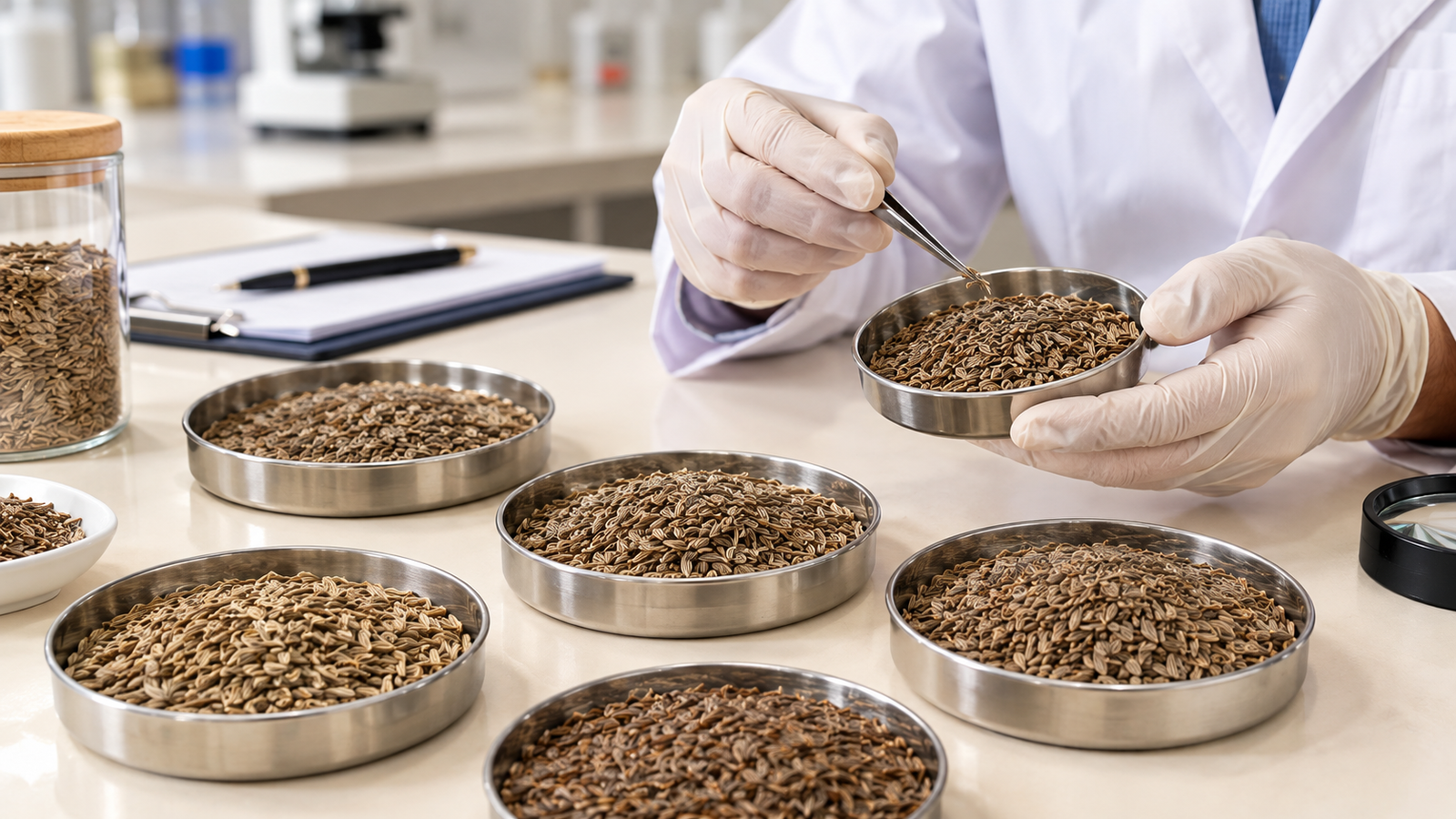
The term “export quality” should refer to a defined set of specifications rather than a general marketing description. Different buyers can require different standards depending on their products, processing methods and destination markets.
1. Purity and Foreign Matter
Purity is an important consideration for whole cumin intended for food processing, seasoning production and wholesale distribution.
Buyers should specify acceptable foreign-matter limits and clarify the cleaning level required. The agreed limits should be recorded in the purchase specification.
2. Moisture Content
Moisture affects storage and product stability. Buyers should establish the required moisture limit and agree on an appropriate testing method.
Storage conditions, packaging and transport conditions should also be considered when planning international shipments.
3. Seed Appearance and Aroma
The appearance, colour, size and characteristic aroma of cumin may influence a buyer’s acceptance criteria. Businesses producing branded spice products may require greater consistency between batches.
Where appearance and aroma are important, agree on sample-approval procedures before confirming the commercial order.
4. Cleaning and Processing Level
Depending on the buyer’s needs, cumin may require cleaning, grading or other processing steps. The specific processing level should be confirmed rather than assumed from a generic product description.
5. Food-Safety and Laboratory Requirements
Depending on the destination and intended application, importers may require documentation or testing for pesticide residues, microbiological parameters, contaminants or other specified characteristics.
Buyers should communicate their destination-market requirements in advance. Any testing claims should be supported by valid documentation relevant to the shipment.
6. Traceability and Origin
Businesses requiring a particular agricultural variety or growing region should clarify whether the supplier can substantiate that information.
Varietal identity, geographical origin and commercial product quality are separate considerations and should not be treated as interchangeable.
Bulk Cumin Seeds Supplier: Packaging and Commercial Requirements
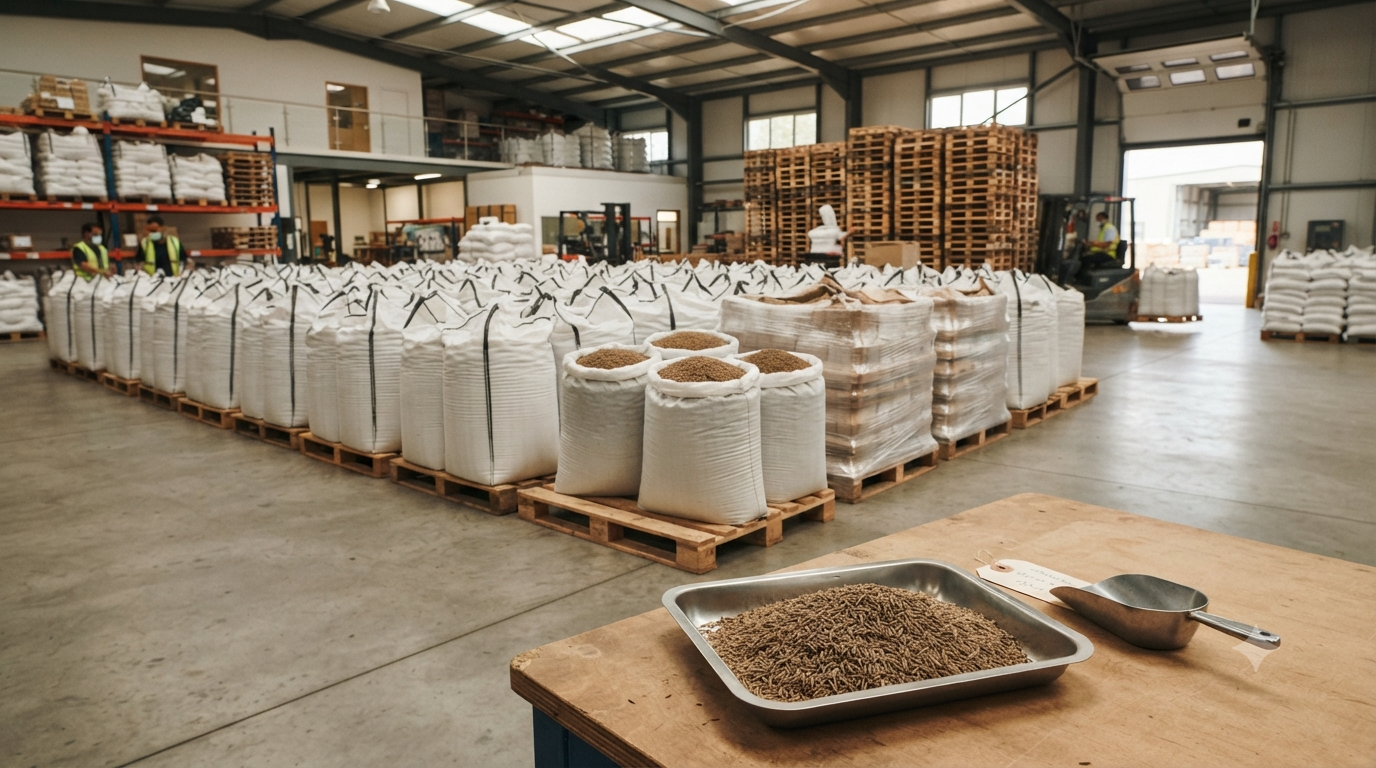
For importers and wholesalers, packaging plays an important role in shipment handling, storage and product protection.
The appropriate format depends on order quantity, transport conditions, the buyer’s distribution model and any destination-specific requirements.
Before requesting a quotation from a bulk cumin seeds supplier, buyers should clarify:
- Required order quantity and preferred pack size
- Packaging material and moisture-protection requirements
- Labelling and marking specifications
- Palletization and handling requirements, where applicable
- Destination port or delivery location
- Required shipment schedule
- Product specification and inspection requirements
Packaging availability should be confirmed with the supplier for the specific order.
Buyers should also request a clearly itemized quotation covering the product, quantity, applicable price basis, payment terms, delivery terms and quotation validity.
For international transactions, Incoterms such as FOB and CIF can help define the respective responsibilities of the buyer and seller. The selected term should be explicitly agreed upon rather than assumed.
How to Import Cumin Seeds from India
Importing cumin involves commercial negotiations, product verification, regulatory checks and shipment coordination. The exact requirements vary according to the destination country and transaction.
Step 1: Define Your Product Requirements
Specify the quantity, product form, quality parameters, packaging preference, destination and intended use.
A detailed enquiry makes it easier for an exporter to understand the actual requirement.
Step 2: Evaluate the Indian Cumin Seeds Exporter
Review the supplier’s business information, communication, available product documentation and ability to address the requested specifications.
Where appropriate, request references and independently verify important commercial claims.
Step 3: Request a Sample and Specification Sheet
When needed, request a representative sample and written specifications. Agree on how the sample will be evaluated and how the final shipment will be checked against the approved parameters.
Step 4: Confirm Price and Delivery Terms
Review the quotation, payment arrangements, order quantity, packaging, delivery term and quotation validity.
Clarify freight, insurance, customs responsibilities and other applicable charges according to the agreed commercial terms.
Step 5: Verify Import Regulations
Confirm the requirements of the importing country before the shipment is arranged. Depending on the market, these may include food-safety rules, pesticide residue limits, import permits, phytosanitary documentation, labelling requirements or other applicable controls.
Step 6: Coordinate Shipment and Documentation
Agree on the documents required for the specific shipment. Depending on the transaction, these may include a commercial invoice, packing list, certificate of origin, bill of lading and applicable inspection or phytosanitary documents.
Not every document is required for every shipment. Requirements should be verified for the product and destination.
Why Choose Kuber Export House for Indian Spice Sourcing?

Kuber Export House is an India-based spice export business focused on B2B sourcing requirements for international markets.
Our spice portfolio includes cumin seeds, turmeric, dry red chilli, green cardamom and coriander seeds.
We recognize that international buyers need more than a product name and a price. They need to communicate their specifications, understand commercial terms and establish clarity around packaging, documentation and shipment requirements.
For businesses exploring Indian cumin seeds, a useful initial enquiry should include the destination country, required quantity, preferred specifications, packaging requirements and expected purchase timeline.
These details help establish whether the requested product and commercial arrangement can be accommodated.
To learn more about our business, visit the About Us page on the Kuber Export House website. Buyers can also explore the available spice range and contact our team to discuss their requirements.
Request a Cumin Seeds Export Quotation
Looking for a cumin seeds exporter from India for your import, wholesale or food-manufacturing business?
Contact Kuber Export House to discuss your cumin sourcing requirements, subject to product availability and agreed specifications.
For a more relevant enquiry, share the following information:
- Company name and destination country
- Required quantity
- Product specifications or grade preference
- Packaging preference
- Destination port or delivery location
- Expected purchase timeline
Our team can review the enquiry and discuss the applicable commercial and export requirements.
Kuber Export House — Connecting Indian Spices with Global B2B Buyers.