
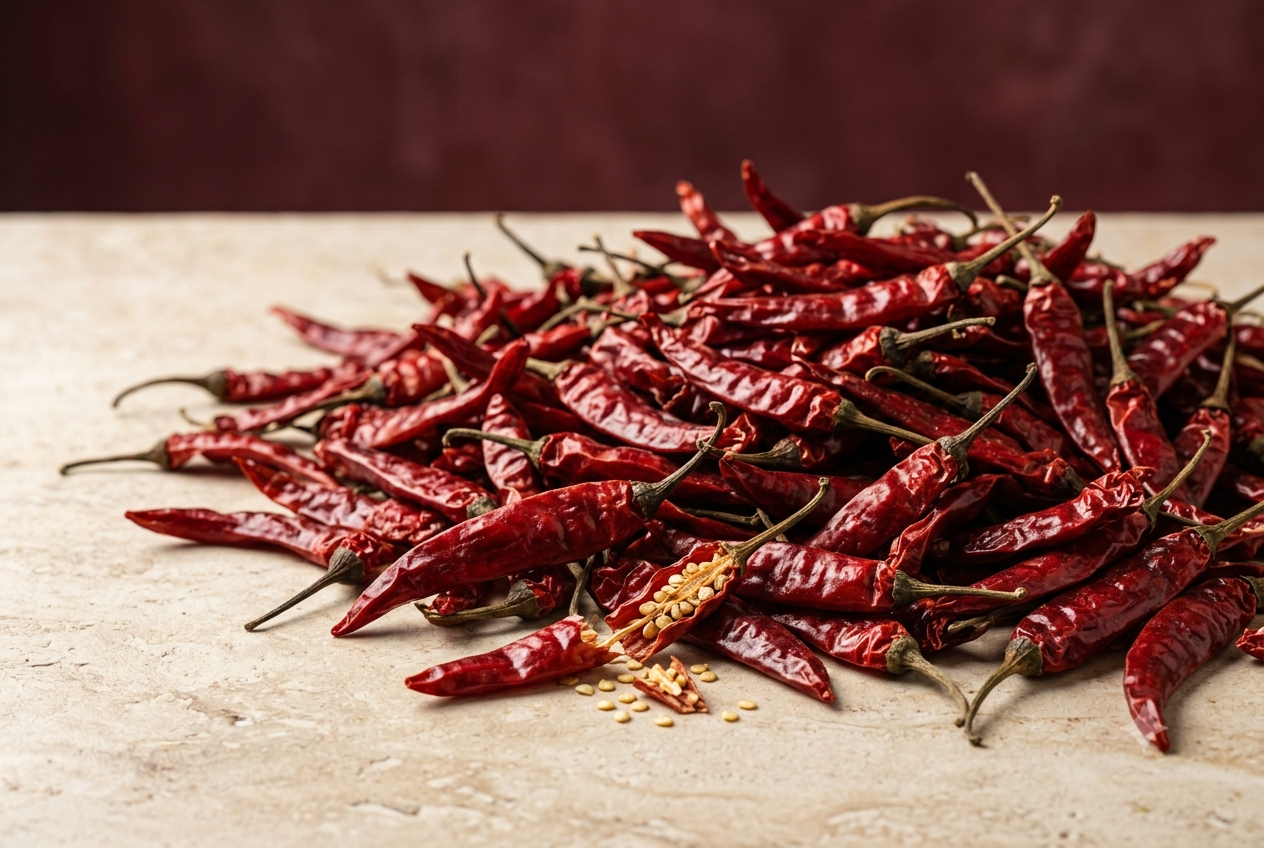
Red Chilli Export from India: A Complete Guide to Varieties, Quality, Prices and Global Sourcing
India has established itself as a major source of chillies for international spice markets, supplying food manufacturers, spice importers, wholesalers, distributors and seasoning companies across the world. With multiple varieties offering different levels of pungency, colour and aroma, Indian dried red chillies serve a wide range of commercial food applications.
For international buyers, choosing the right product involves more than comparing prices. Variety selection, moisture content, colour consistency, food safety, processing standards, packaging and export documentation all influence the quality and commercial value of a shipment.
Whether you are sourcing whole dried chillies for wholesale distribution or raw material for chilli powder, sauces and spice blends, understanding the Indian chilli supply chain can help you make better purchasing decisions.
In this guide, we explore the major varieties, export-quality considerations, pricing factors and essential steps involved in sourcing dry red chillies from India.
Why Is India an Important Source of Dry Red Chilli?
India has a well-established chilli-growing and spice-processing industry, supported by agricultural production regions, domestic trading networks and export infrastructure. Indian chillies are valued for their variety, pungency, colour characteristics and suitability for different food-processing requirements.
According to the Spices Board of India, chilli accounted for 27% of the value of India’s spice and spice-product exports in 2025–26, demonstrating its importance in the country’s spice trade.
International buyers source Indian chillies for several applications, including:
Spice blends, curry powders and seasoning mixes
Commercial chilli powder production
Hot sauces and spicy condiments
Food manufacturing and ingredient processing
Wholesale distribution and retail packaging
Selected colour and oleoresin extraction applications
The right variety depends on the buyer’s intended application, required heat level, colour profile and destination-market specifications.
For importers seeking a reliable red chilli exporter, understanding these differences is an essential first step towards establishing a successful sourcing relationship.
Major Indian Red Chilli Varieties for Export
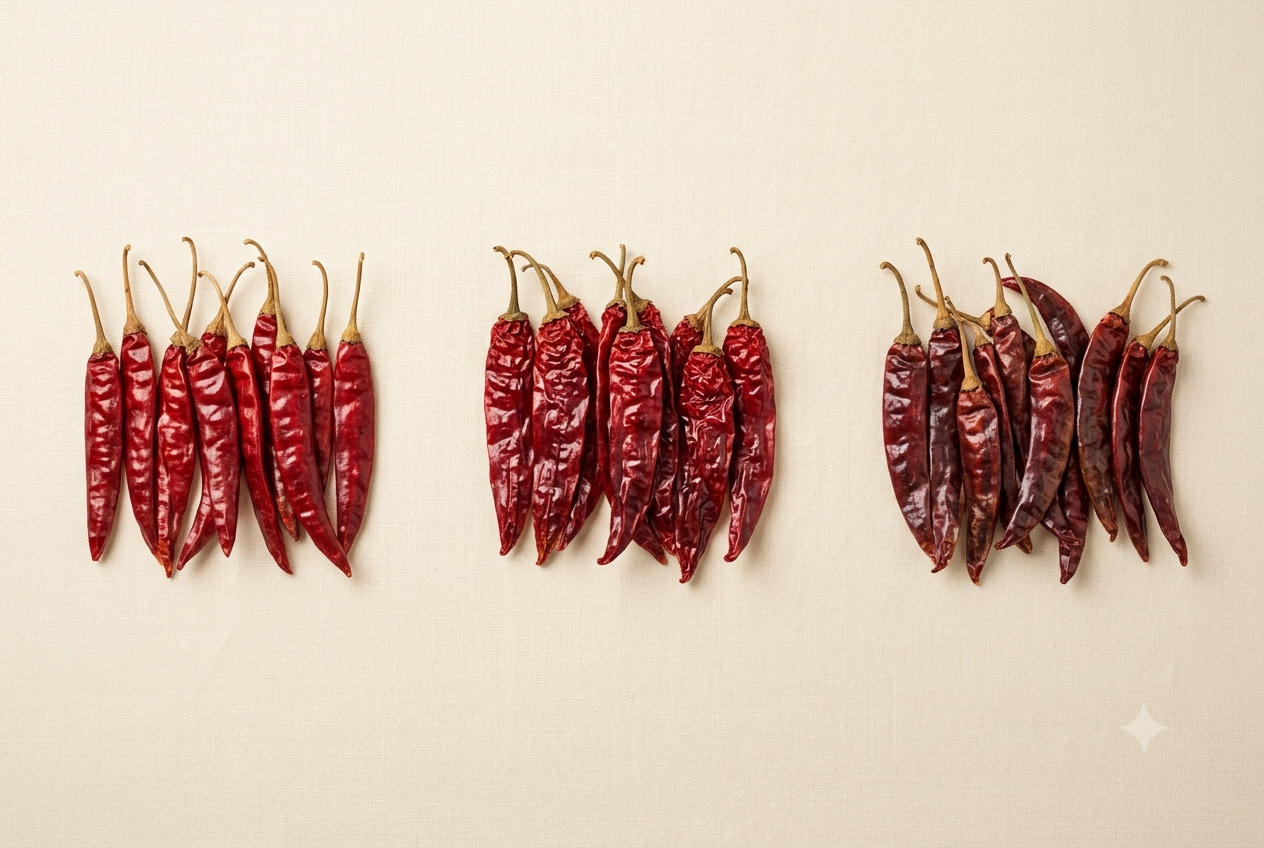
Not all dried red chillies offer the same characteristics. Some varieties are preferred for their pungency, while others are valued for their colour, appearance or suitability for grinding.
The following varieties are commonly encountered in the Indian chilli trade.
1. Teja S17 Chilli
Teja, commonly traded under the S17 designation, is known for its high pungency and is widely used in applications requiring a pronounced spicy profile.
Typical commercial applications include:
Hot sauces and spicy condiments
High-heat seasoning blends
Chilli powder manufacturing
Industrial spice processing
Buyers evaluating S17 Teja chilli price should compare the actual grade, moisture level, colour, pungency and quality test results rather than relying on the variety name alone.
Specifications can vary between lots and suppliers, so buyers should confirm the agreed parameters before placing a bulk order.
2. Guntur Sannam and Sannam 334 Red Chilli
Guntur is one of India’s best-known chilli trading and production regions. Sannam varieties are widely traded for culinary applications, spice blends and commercial processing.
Sannam 334 red chilli is a trade designation encountered in the Indian chilli market. Buyers should clarify the exact variety, grade and specifications with their supplier because commercial naming conventions may differ.
These chillies can be considered for:
Chilli powder production
Curry and masala blends
Food-service supply
Bulk spice distribution
General food-processing applications
When evaluating dry red chilli exporters, importers should request representative samples and compare the colour, pod condition, pungency and processing suitability of the offered lots.
3. Byadgi Chilli
Byadgi chilli is associated with Karnataka and is particularly recognised for its deep red colour and characteristic appearance. It is often considered for applications where colour is an important product attribute.
Potential applications include:
Regional spice blends
Chilli-based culinary products
Colour-focused food formulations
Selected extraction and processing uses
Buyers searching for Byadgi chilli exporters should specify whether they require a particular Byadgi type, such as a defined commercial grade, along with the desired colour and pungency profile.
Choosing the Right Variety
| Variety | Common commercial preference | Important buying consideration |
|---|---|---|
| Teja S17 | High-pungency applications | Confirm actual pungency and grade |
| Guntur Sannam | General-purpose spice processing | Confirm variety and intended use |
| Sannam 334 | Culinary and bulk processing | Verify the commercial designation |
| Byadgi | Colour-focused applications | Confirm colour and heat specifications |
The best variety is the one that meets your product requirements consistently, not necessarily the one with the lowest quoted price.
What Determines the Quality of Export-Grade Dry Red Chilli?
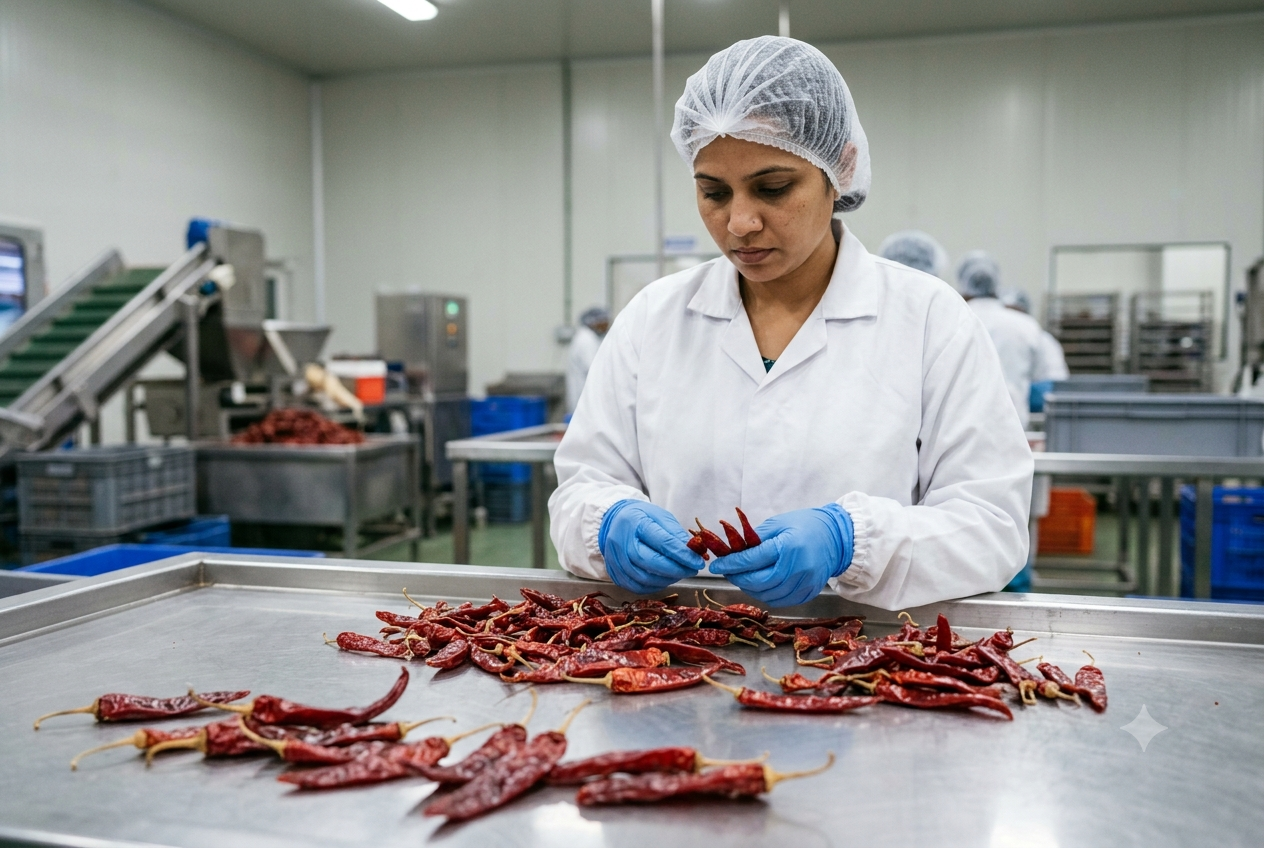
Quality is one of the most important considerations when sourcing dried chillies for international markets. A product that looks attractive externally may still fail to meet the buyer’s requirements if its moisture, microbiological or chemical parameters are unsuitable.
Before confirming an order, consider the following factors.
Moisture Content
Excess moisture can contribute to deterioration, mould growth and reduced storage stability. Buyers should specify the acceptable moisture limit for the product and destination market.
The required limit should be agreed in the purchase specification rather than assumed to be identical for every chilli product.
Colour and Appearance
Colour affects the visual appeal of whole chillies and can be particularly important for grinding and formulation.
Buyers should evaluate colour consistency, maturity, visible discolouration, damaged pods and foreign matter. Where relevant, laboratory assessment of colour value can provide a more objective comparison.
Pungency
Pungency determines how much heat a chilli contributes to a finished product. The Scoville Heat Unit (SHU) scale is commonly used to express chilli heat.
If your business requires a particular pungency level, request an appropriate test result instead of relying solely on a variety name.
Cleanliness and Physical Condition
Export-quality chillies should be assessed for foreign matter, infestation, damaged pods and other visible defects. Sorting, cleaning and suitable handling help improve product consistency.
Food Safety and Laboratory Testing
Depending on the importing market and product, buyers may need to evaluate aflatoxins, pesticide residues, prohibited colourants and microbiological parameters.
Testing requirements vary by destination and product category. Confirm the applicable standards and documentation before shipment.
For additional export guidance, consult the Spices Board of India and the relevant importing country’s food-safety authority.
Understanding Red Chilli Export Prices from India
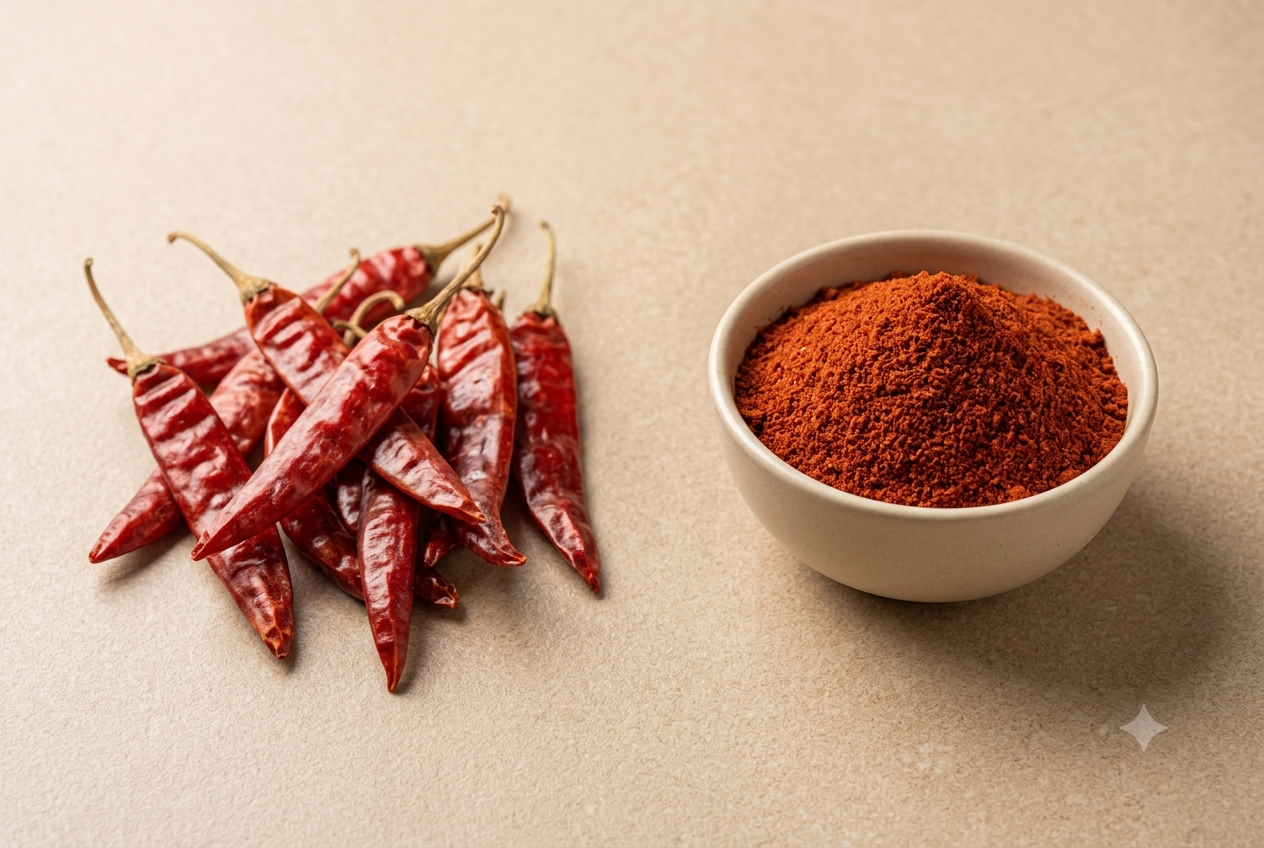
The red chilli export price from India is not a single fixed rate. It varies according to the product specification, market conditions, order quantity and shipping arrangements.
A meaningful quotation should clearly describe the product being offered and the commercial terms applicable to the transaction.
Key Factors That Influence Pricing
1. Variety and grade: Different chilli varieties and grades can command different prices depending on their characteristics and demand.
2. Crop availability: Seasonal supply, agricultural conditions and arrivals in major trading markets can influence raw-material prices.
3. Colour and pungency: Buyers requesting specific colour values, heat levels or other measurable parameters may face different pricing from buyers purchasing standard commercial grades.
4. Processing requirements: Cleaning, destemming, sorting, grinding and additional quality-control procedures can affect the final quotation.
5. Order quantity: Bulk quantities, packaging requirements and shipment size can influence the overall commercial offer.
6. Packaging: Food-grade liners, bags, cartons and specialised packaging may change the cost per unit.
7. Freight and trade terms: Inland transport, port handling, insurance and ocean freight can affect the landed cost.
How to Compare Supplier Quotations
When comparing offers from Indian chilli exporters, ensure that every quotation covers the same product specifications.
Ask each supplier to confirm:
Variety and grade
Product form and stem condition
Moisture and quality parameters
Packaging type and net weight
Minimum order quantity
Shipment origin and delivery terms
Applicable testing and documentation
Quotation validity and payment terms
A low initial price may not represent the best overall value if the shipment requires additional processing or fails to meet the buyer’s specifications.
For this reason, evaluate the total landed cost and product suitability rather than focusing exclusively on the quoted rate.
How to Choose a Reliable Indian Chilli Exporter
Selecting the right supplier can affect product consistency, delivery planning and long-term procurement costs.
Businesses searching for red chilli powder exporters or suppliers of whole dried chillies should evaluate the following points before entering into a commercial agreement.
1. Verify the Supplier’s Business Credentials
Review the supplier’s business details, applicable registrations, export experience and ability to provide the documentation required for your market.
Where relevant, verify registration or certification claims with the issuing authority.
2. Request Samples Before Bulk Orders
A representative sample allows your quality team to examine the product’s appearance, aroma, pungency and suitability for the intended application.
For repeat purchases, agree on a written specification that can be used to evaluate subsequent lots.
3. Ask for Product-Specific Test Reports
Request relevant laboratory reports and clarify which parameters have been tested. Check whether the results correspond to the lot being offered.
Additional testing or independent inspection may be appropriate for regulated or high-volume shipments.
4. Evaluate Communication and Documentation
A professional supplier should be able to clarify specifications, packaging, shipping terms and required documents.
Confirm responsibilities and timelines in writing before payment and shipment.
5. Compare More Than One Offer
Obtain comparable quotations from multiple suppliers and assess quality, delivery, documentation and total cost together.
This process helps buyers make a more informed decision when selecting a long-term export partner.
Red Chilli Export from India: Packaging and Shipping Considerations
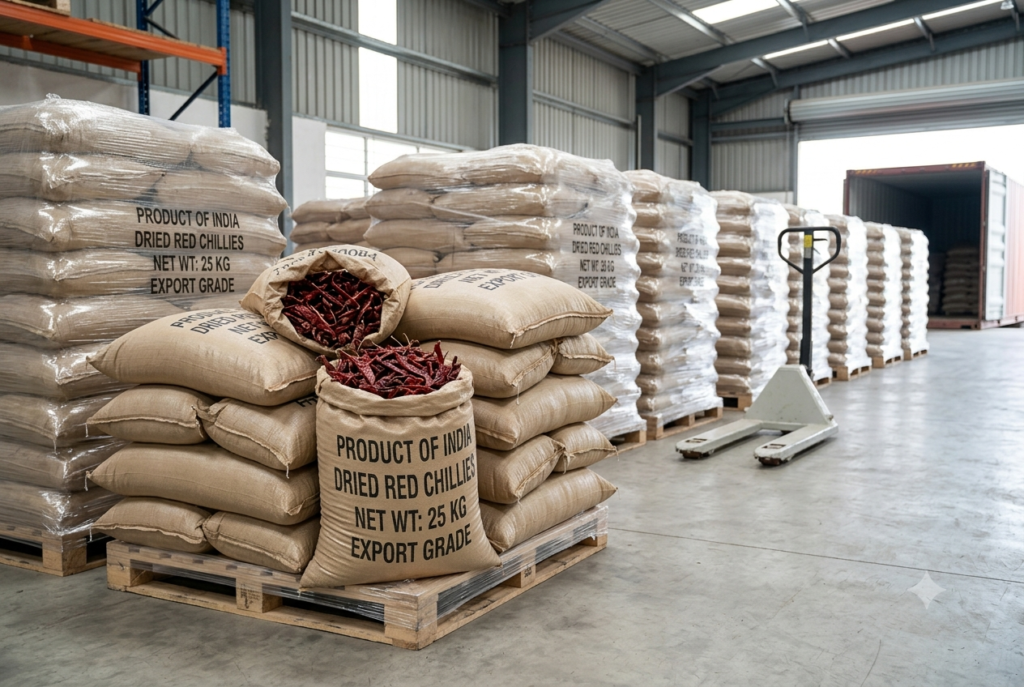
Packaging plays an important role in preserving product quality during storage and international transportation.
The suitable format depends on whether the shipment contains whole dried chillies, crushed flakes or chilli powder.
Common commercial packaging options may include:
Food-grade woven polypropylene bags with suitable liners
Other approved bulk packaging formats
Cartons or specialised packs for selected product requirements
Retail or private-label packaging, subject to supplier capability
Packaging should protect the product from moisture, contamination, physical damage and unsuitable storage conditions.
Buyers should also confirm net weight, labelling, batch identification and destination-market requirements before dispatch.
Shipping arrangements may be negotiated under applicable Incoterms, such as FOB or CIF, depending on the transaction. The quotation should identify the named port or destination and clearly explain which transportation costs are included.
Who Buys Indian Dry Red Chillies?
The international market for dried chillies includes businesses with different purchasing needs.
Food Manufacturers
Food manufacturers source chillies for sauces, seasonings, packaged foods and other formulations. Consistent specifications are particularly important for repeat production.
Spice Importers and Distributors
Importers and distributors purchase bulk quantities for onward supply to wholesalers, retailers and food businesses.
Chilli Powder Manufacturers
Grinding companies require raw material suited to their target colour, heat profile, processing yield and food-safety requirements.
Wholesale Spice Traders
Wholesale buyers may prioritise competitive procurement, dependable availability, appropriate packaging and consistent grading.
Private-Label Businesses
Private-label brands may require customised product formats, packaging and labelling that comply with the regulations of their target markets.
Understanding the buyer’s business model helps determine the most appropriate variety, packaging and commercial arrangement.
What About the World’s Largest Chilli Exporters?
Businesses researching the largest chilli exporters in the world should distinguish between dried whole chillies, crushed or ground chilli products, and broader categories of chilli-containing preparations.
International trade rankings can differ depending on the reporting year, product classification, shipment volume and export value.
India is an important participant in global chilli trade, but a reliable ranking should be based on comparable official trade data rather than unsupported claims about the top ten exporters.
For market research, importers can examine official trade statistics, including data from the Spices Board of India and international trade databases. This helps identify relevant supplying countries, changing market demand and potential sourcing opportunities.
Frequently Asked Questions About Red Chilli Exports
1. Which red chilli varieties are exported from India?
Commonly traded varieties include Teja, Guntur Sannam, Sannam 334 and Byadgi, among others. Availability and exact specifications depend on the supplier and current market conditions.
2. How can I find the current S17 Teja chilli price?
Request a current quotation specifying the required grade, quantity, moisture level, packaging, delivery terms and destination. Prices can change with market conditions and product specifications.
3. Can I import dry red chillies directly from India?
Yes, subject to the exporter’s capabilities and the importing country’s applicable import, food-safety and documentation requirements. Buyers should confirm these requirements before placing an order.
4. What is the difference between whole dry red chilli and chilli powder?
Whole dried chillies retain their pod structure, whereas chilli powder is a ground product. Their processing requirements, packaging, testing needs and storage considerations can differ.
5. What documents should I request from a chilli exporter?
Depending on the transaction and destination, relevant documents may include a commercial invoice, packing list, shipping documentation, certificate of origin and applicable inspection or laboratory certificates. The exact requirements should be confirmed for each shipment.
Source Dry Red Chillies from India with Kuber Export House
Choosing a suitable supplier is an important step towards building a reliable spice procurement process. International buyers should focus on clear product specifications, transparent quotations, appropriate quality checks and well-defined shipping terms.
Kuber Export House works in the Indian spice export sector, connecting international sourcing requirements with Indian spice products. Businesses interested in sourcing dried red chillies can discuss their intended application, preferred variety, quantity and destination requirements with the team.
Whether you are a spice importer, wholesaler, food manufacturer or distributor, defining your specifications clearly can help make the sourcing process more efficient.
Looking to source Indian spices for your business?
Visit Kuber Export House to explore your sourcing options and enquire about product availability, specifications and export requirements.
Contact: info@kuberexporthouse.com
Product availability, specifications, prices and shipping arrangements are subject to confirmation at the time of enquiry.